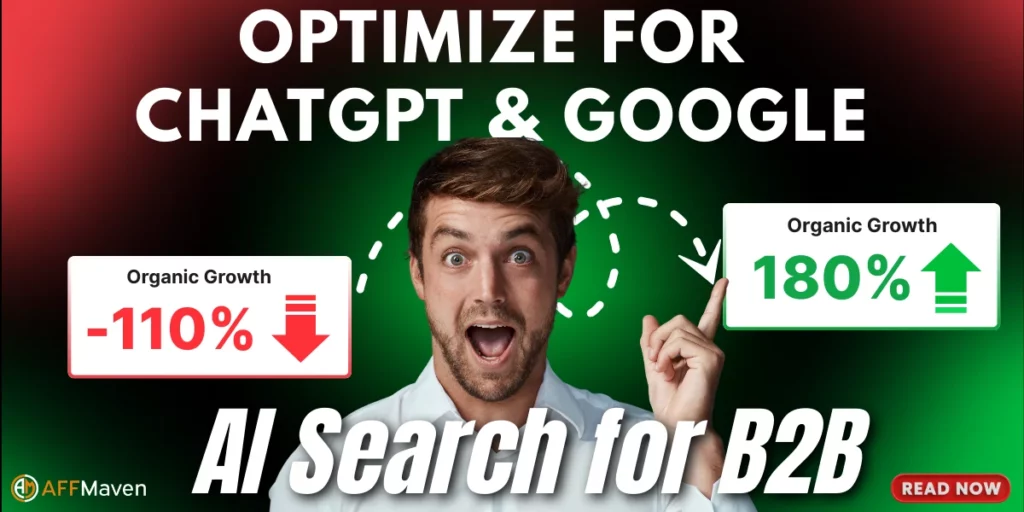
Google is no longer the only gatekeeper of your B2B traffic. The “ten blue links” era is fading, replaced by direct answers from AI.
34% of qualified B2B leads now come from AI-native platforms like ChatGPT and Perplexity, surpassing organic search and email for the first time.
If your SaaS isn’t part of the conversation inside these models, you are invisible to a third of your market.
At AFFMaven, we have watched this shift happen in real-time. We have spent over a decade in affiliate marketing. We know that “ranking” is no longer just about keywords. It is about entity presence.
We’ll explain how Generative Engine Optimization (GEO) works and how to force AI models to recommend your software.
The New Reality: Zero-Click Research
Buyers are “one-shotting” their research. Instead of spending hours reading five different “Best CRM” articles, a buyer types:
“Find me a CRM for a real estate agency with 50 agents that integrates with Zillow and costs under $500/month.”
The AI scans its training data and the live web. It gives one answer. If you are the answer, you win. If you are a link in the footnotes, you might get a click. If you are neither, you are invisible.
Key 2025 Data Points:
This isn’t doom and gloom. It is an opportunity. While general traffic drops, homepage traffic for cited brands is actually up 10.7%. This means when AI recommends you, buyers skip the content and go straight to your front door to buy.
3 Types of AI Visibility for SaaS & Affiliates
There are three ways your brand (or affiliate site) can show up in AI search.
Type 1: Brand Mentions
Brand mentions mean your brand appears in the AI’s answer. It is not always an endorsement. It is simply the AI recognizing your brand as relevant to the topic.
For example, I asked ChatGPT: “How can remote teams stay aligned on projects?”
ChatGPT outlined a few tactics and listed several tools, naming specific brands as examples. At this level, brand sentiment is key. A positive tone builds early trust.
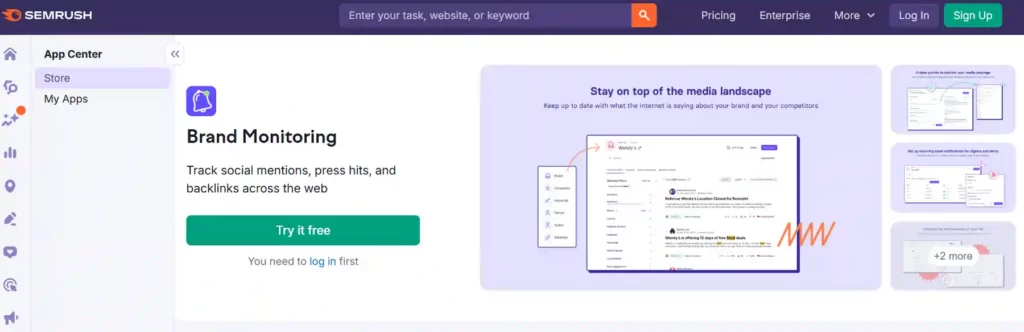
Use the Semrush AI Visibility Toolkit or similar tools to check “Perception.” You need to see if the AI thinks your brand is “reliable” or “buggy.”

Semrush Exclusive Deal
Grab 17% off on Semrush subscription with our exclusive coupon and extended 14-day free trial.
ADD Semrush Coupon
Type 2: Citations (The Gold Mine for Affiliates)
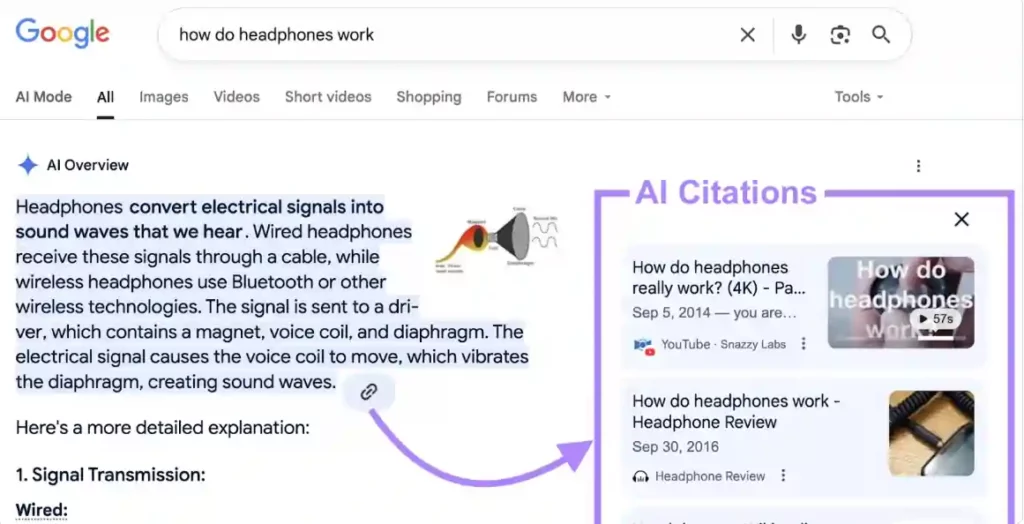
Citations are instances of AI using your content as a source. This is where affiliates can win big.
In Google AI Mode, citations show up as clickable links. In ChatGPT, they appear as footnotes.
The “Zapier Paradox”
Semrush’s AI Visibility Index report highlights a strange trend called the “Zapier Paradox.” Zapier was the most-cited domain in the software category (21% of prompts), yet ranked only #44 for brand mentions.
What this means for you: The AI trusts Zapier’s content enough to use it constantly to answer questions, even if it doesn’t recommend Zapier the product.
As an affiliate, you want to be Zapier. You want the AI to read your “Best CRM Review” article and use your data to answer the user’s question. This generates high-intent click-throughs to your site.
Type 3: Product Recommendations
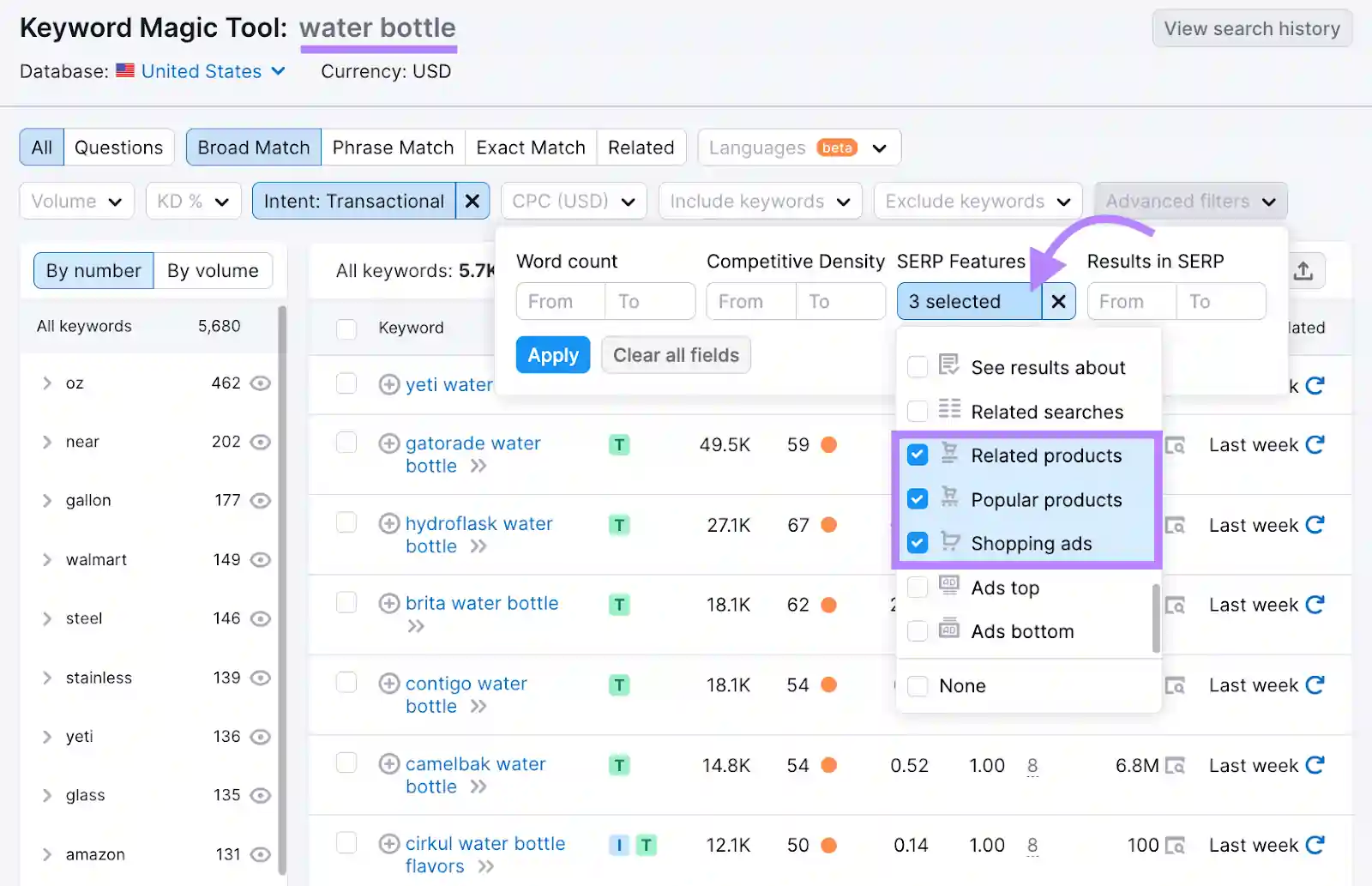
This is the holy grail. The AI moves from “here are options” to “you should choose this.”
To get recommended, your brand needs two things:
How AI Models Choose Winners (The Data)
Different AI models trust different sources. You cannot use the same strategy for ChatGPT that you use for Perplexity.
Here is the breakdown of source preferences based on 2025 data:
| AI Platform | Primary Data Source | Secondary Source | Best Strategy |
|---|---|---|---|
| Perplexity | Reddit (46.5% of citations) | Niche Blogs & News | Community engineering & discussions |
| ChatGPT | Wikipedia & Trusted Media | LinkedIn & G2 | PR placements & “Neutral” Wiki-style content |
| Google AI | YouTube (19%) & Quora | Reddit (21%) | Video reviews & detailed FAQ answers |
| Claude | Academic/Technical Docs | Long-form articles | In-depth technical guides & whitepapers |
55% of businesses predict users will prefer AI chatbots over search engines for information gathering by the end of 2025. If you ignore this, you ignore half your market.
AFFMaven Strategy: How to Steal the Spot
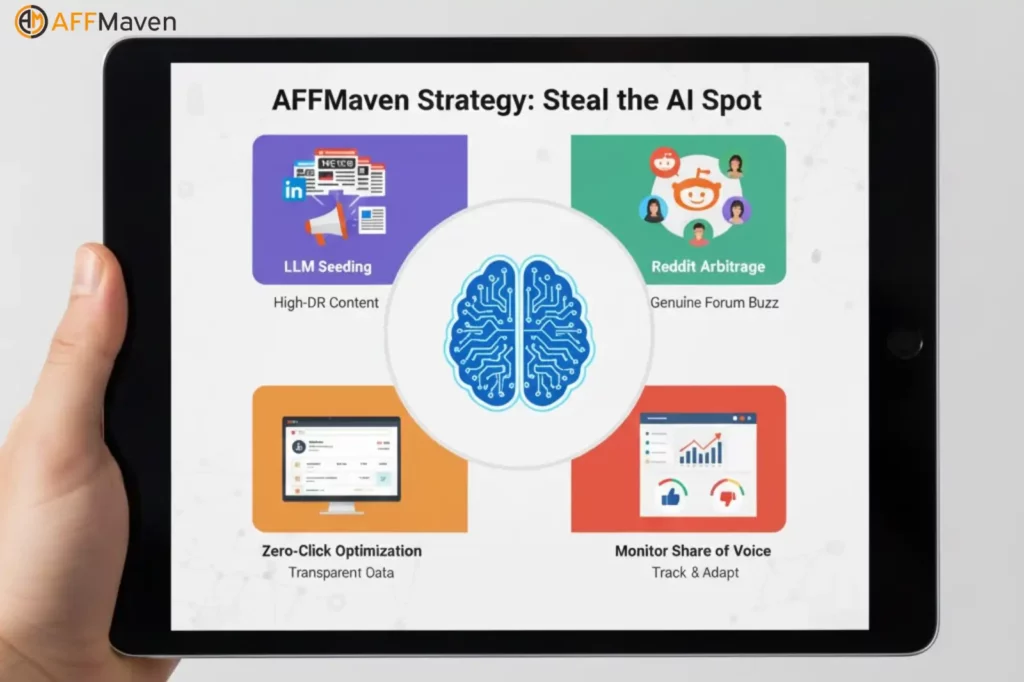
We have tested this across multiple verticals. Here is how you manipulate the “neural weights” in your favor.
Step 1: LLM Seeding via “Parasite” Content
Your domain authority might be too low to influence the AI quickly. So, borrow authority. This is a classic affiliate tactic we have used for a decade.
Step 2: The “Reddit Arbitrage”
Google and LLMs have an unhealthy obsession with Reddit. They treat it as the ultimate source of human truth.
Step 3: Optimization of “Zero-Click” Content
Stop hiding your pricing. Stop hiding your features behind a “Request Demo” wall.
Step 4: Monitor Share of Voice
You cannot improve what you do not measure.
Tracking this is harder than traditional SEO, but new tools are emerging. Use Semrush or specialized “GEO” trackers to see how often you appear in AI answers for your target keywords.
Check your “Sentiment Score.” If it dips, find the negative review source and address it immediately.
Maven Verdict: The Future is “Zero-Click”
We have spent over a decade in affiliate marketing, and we have seen networks rise and fall based on their ability to adapt to traffic sources. The era of “10 blue links” is ending.
Our official stance:
If you ignore GEO, you are invisible to 50% of your market.
The Action Plan:
The brands that win in 2026 won’t be the ones with the best keywords. They will be the ones that the AI trusts enough to recommend.
Stay Updated with Us
🚀 Get Exclusive Affiliate Marketing Secrets🚀
Discover the strategies, tools, and tactics used by the top 1% of affiliate earners!

Join 69,572+ Affiliates already leveling up their game
Affiliate Disclosure: This post may contain some affiliate links, which means we may receive a commission if you purchase something that we recommend at no additional cost for you (none whatsoever!)