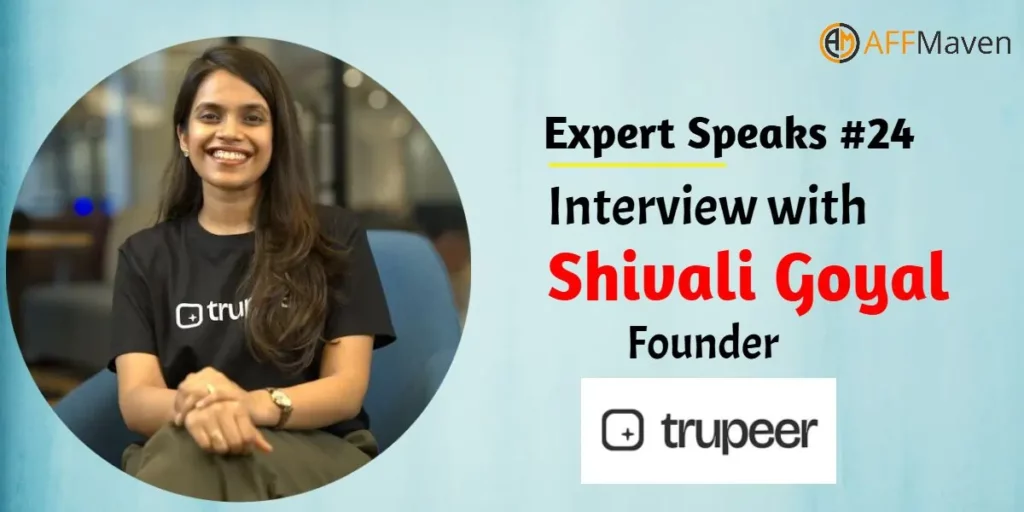
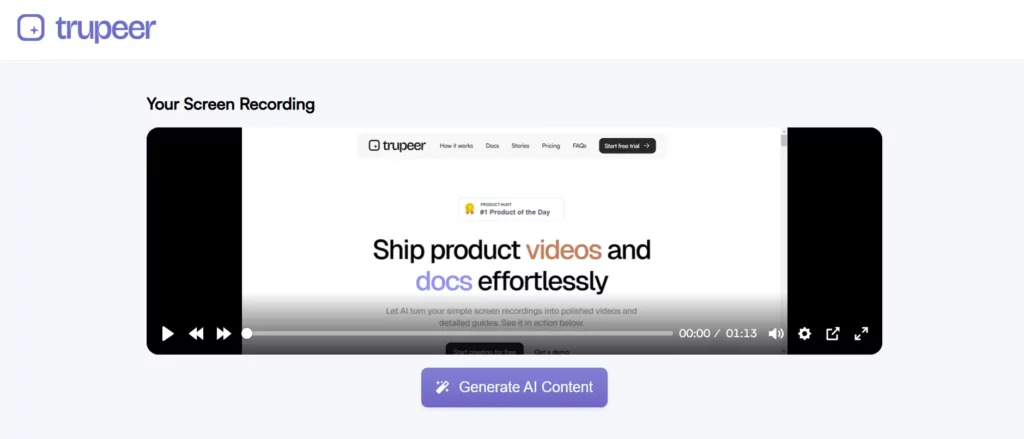
Trupeer is one of the top AI platforms for turning simple screen recordings into polished videos, guides, and documentation.
Founded in 2025, Trupeer provides a full suite where users record workflows once to get automated content with voiceovers, annotations, and summaries for software teams.
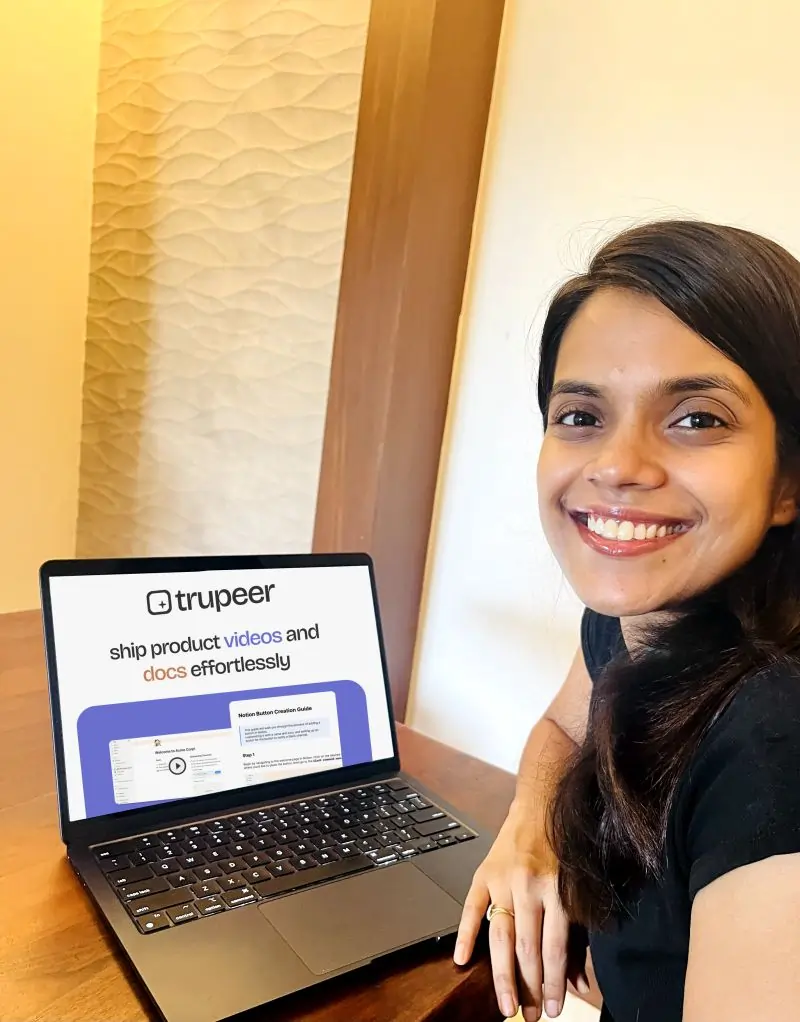
At the head of this tech is Shivali Goyal, the founder and CEO of [Trupeer].
With a background in chemical engineering from IIT Delhi, roles at BCG and startups like WhiteHat Jr, Shivali has turned her skills in problem-solving and product scaling into a tool for efficient AI content creation.
Let’s hear her out and try to get some valuable insights from her experience in the industry!
1. Your journey from Chemical Engineering at IIT Delhi (Department Rank 1) to BCG consulting, then to tech startups, and now AI – that’s quite the evolution!
Q: What were the pivotal moments that shaped this transformation, and how did your analytical engineering background influence your approach to building AI solutions?
A: My journey has truly been a blend of analytical rigor, strategic thinking, and an entrepreneurial spirit. At IIT Delhi, studying Chemical Engineering (and graduating as Department Rank 1) taught me to approach problems from first principles, break down complexity, and always be curious about systems and optimization.
Joining BCG after that exposed me to high-stakes strategic problem-solving and working with some of the brightest minds in business. Being able to work closely with top executives helped me understand the importance of aligning vision, execution, and market dynamics.
The transition to startups came from a strong desire to build and create impact hands-on. At WhiteHat Jr and later Pillow, I experienced the thrill (and chaos!) of scaling products from zero to one and beyond.
Moving into AI felt like a natural next step because it combines my love for technology with my passion for solving deep, real-world problems. My engineering background still influences how I think about AI — focusing on structure, scalability, and tangible outcomes rather than just trends.
2. The BCG “Ambassador to CEO” Experience
Q: Being selected as “Ambassador to the CEO” at BCG and earning “Star Performer” recognition twice is remarkable. What unique insights did this prestigious role give you about leadership and strategic thinking that you now apply as a founder? How did working directly with C-suite executives prepare you for the challenges of running your own company?
A: The “Ambassador to the CEO” role at BCG was transformative. It gave me a front-row seat to how large, complex organizations think, make decisions, and adapt to change. I learned that great leaders simplify complexity, communicate with clarity, and inspire action even in uncertain times.
Working with C-suite leaders taught me to always keep the bigger picture in mind, to balance short-term tactical decisions with long-term strategy, and to deeply value trust and alignment within a team.
As a founder, these lessons are invaluable. Startups move fast, but you need to ensure every step contributes toward your core vision. It also taught me to embrace feedback fearlessly, build strong relationships with stakeholders, and remain calm under pressure.
3. The WhiteHat Jr and Pillow Chapter
Q: You’ve had fascinating stints at WhiteHat Jr as Director of CEO’s Office and co-founded Pillow (the savings app). These experiences span EdTech and FinTech before landing in AI. What core lessons from scaling education technology and building financial products directly influenced Trupeer’s product philosophy?
A: At WhiteHat Jr, I learned the importance of storytelling — not just externally to customers, but internally to teams. It was about creating clarity, driving alignment, and executing at scale. The obsession with customer outcomes there taught me to keep user impact at the center of every decision.
At Pillow, operating in FinTech taught me to navigate a highly regulated space while still building delightful user experiences. It reinforced the importance of trust and security in product design.
Both experiences deeply influenced Trupeer’s philosophy: build fast but with high empathy for the user, prioritize clarity and simplicity in product flows, and balance innovation with reliability. Our vision at Trupeer is to empower teams to communicate beautifully and efficiently, and these lessons are core to that mission.
4. The “Aha!” Moment for Trupeer
Q: Every great product solves a problem the founder deeply understands. What was that moment when you realized that transforming messy screen recordings into professional content was the billion-dollar opportunity? Was there a specific frustration or gap you experienced personally?
A: The “aha!” moment came during my time working with product and marketing teams. We constantly needed to explain new features, onboard users, or create product demos. The process was painful: recording screens, manually editing, adding voiceovers, writing documentation separately — it was slow and frustrating.
I realized there was a huge gap: teams wanted to focus on building products, not on producing content. Yet high-quality, clear content was critical to product adoption and user trust.
That personal frustration, combined with seeing how widespread this pain point was across tech teams globally, sparked the idea for Trupeer. We envisioned a future where all of this could be automated and elevated through AI — and that’s what we’re building.
5. Beyond Screen Recording: The Multimodal AI Vision
Q: Trupeer isn’t just another screen recorder – it’s a comprehensive AI platform that generates videos, documentation, and guides simultaneously. Walk us through your technical vision: How are you leveraging different AI models (LLMs, computer vision, speech synthesis) to create this seamless experience?
A: Yes, at Trupeer, our vision is to create a single, intelligent layer that turns any software workflow into a full suite of shareable content. We leverage LLMs to understand context and generate scripts, summaries, and guides automatically.
We use computer vision to detect screen flows and understand UI interactions, allowing us to intelligently segment and annotate videos. Speech synthesis then converts these scripts into natural-sounding voiceovers, making videos feel polished and professional without manual effort.
The interplay of these models creates a seamless experience: you record once, and Trupeer outputs a video, detailed documentation,— all ready to share. It’s about turning “one input” into “infinite outputs,” saving time while elevating quality.
6. Democratizing Content Creation: The Bigger Picture
Q: You’ve spoken about “democratizing content creation for software around the world.” This suggests a much larger vision than just video creation. What does this democratization look like in 5 years? Are you building towards a future where anyone can create Hollywood-quality content?
A: Absolutely. In five years, we envision a world where anyone — whether a solo developer or a global enterprise — can produce content that looks as polished as a high-budget studio production.
Democratization, to me, means eliminating the barriers of skill, cost, and time. Today, creating great content often requires specialized teams and significant budgets. We want to make it so intuitive and accessible that anyone can showcase their work beautifully, instantly.
The end goal is to empower every creator to focus on their message and innovation, not worry about production. We see a future where high-quality, multimodal content becomes the norm for everyone, not just big companies.
7. The Salesforce Victory: Strategic Implications
Q: Congratulations on winning Salesforce’s inaugural AI Pitchfield competition and securing $100K investment! This isn’t just funding – it’s validation from one of the world’s largest SaaS companies. How does this partnership potentially reshape Trupeer’s go-to-market strategy, and what doors does it open in the enterprise market?
A: Thank you! Winning the Salesforce AI Pitchfield was a huge milestone for us. More than the funding, it’s a powerful validation from one of the most respected SaaS leaders globally.
This partnership gives us credibility and access to a large network of enterprise customers who already trust Salesforce. It also opens opportunities for integrations and co-selling strategies, which can dramatically accelerate our entry into large accounts.
In terms of go-to-market, it helps us position Trupeer not just as a tool for startups, but as a strategic platform for global enterprises looking to scale product enablement and customer education.
8. David vs. Goliath: Competing in the AI Video Space
Q: The AI video generation market is projected to reach $2.5 billion by 2032, with players like Synthesia, Runway, and HeyGen already well-funded. What’s your differentiation strategy?
A: Our strategy is to focus on depth rather than breadth. While many players focus on general-purpose video creation, Trupeer is laser-focused on software teams and product workflows.
We’re not just making videos; we’re helping teams communicate complex workflows clearly — combining video, documentation, in one seamless package.
This vertical focus allows us to build deep integrations with the tools these teams already use and to solve specific pain points that generalist solutions overlook. By prioritizing specialized value, we create a stronger moat and deeper user love.
9. The 10,000+ Teams Milestone
Q: Reaching 10,000+ teams using Trupeer is impressive for a young company. What patterns do you see in your most successful users? Are there specific industries or use cases driving this adoption, and how are you planning to scale this growth?
A: Thank you! It’s been humbling to see this growth. Our most successful users tend to be software and SaaS teams that rely on rapid user onboarding and internal enablement — think product-led growth companies, DevTool startups, and customer education teams.
They value speed, clarity, and consistency in content creation. The main use cases driving adoption are product walkthroughs, release notes, support documentation, and training guides.
To scale, we’re investing in deeper integrations (like Notion, Slack, GitHub), expanding AI capabilities, and growing our community-driven support and feedback programs. We want to keep fueling this flywheel of adoption and love.
10. Beyond the $100K: The Fundraising Roadmap
Q: While the Salesforce investment is significant, scaling AI infrastructure requires substantial capital. What’s your fundraising strategy for the next 12-18 months? Are you targeting specific investor profiles, and what metrics will you focus on to demonstrate traction?
A: Over the next 12–18 months, we’re planning to raise a larger round focused on scaling our AI infrastructure, expanding internationally, and building out more advanced product capabilities.
We’re targeting mission-aligned investors who deeply understand SaaS, AI, and the content ecosystem. Investors who share our vision of democratizing software content creation and can bring strategic value beyond capital.
Key metrics will include revenue growth, retention rates, active content creation metrics, and enterprise expansion milestones. We want to demonstrate both strong usage and the strategic stickiness of our platform.
11. The Global Expansion Play
Q: You mentioned “democratizing content creation for software around the world” – this suggests global ambitions. Many successful Indian startups struggle with international expansion. What’s your approach to scaling globally, and which markets are you targeting first?
A: Our approach is to expand thoughtfully and community-first. We’re starting with English-speaking markets like the US, UK, and Australia because they already have strong SaaS ecosystems and early adopter mindsets.
We aim to build strong local partnerships, tap into product communities, and focus on solving real user pain points before aggressively scaling.By building deep trust and ensuring our product resonates globally, we believe we can overcome the common challenges faced by Indian startups going international.
12. The AI Content Creation Revolution
Q: We’re witnessing an explosion in AI-generated content across text, images, video, and audio. Where do you see the content creation industry heading in the next 3-5 years? What role will human creativity play when AI can generate professional-quality content in seconds?
A: We’re entering an era where AI will handle the heavy lifting of content generation, but human creativity will remain central to storytelling, brand voice, and emotional connection.
In the next 3–5 years, we’ll see AI as more of a creative co-pilot than a replacement. It will empower people to experiment faster, iterate more boldly, and focus on strategic creativity rather than manual execution.
Human imagination and judgment will always be irreplaceable — AI simply enhances our ability to bring ideas to life at scale.
13. From Consulting to Founding: Advice for Aspiring Entrepreneurs
Q: Your transition from prestigious consulting to startup founding is inspiring for many professionals in similar positions. What advice would you give to someone at BCG or similar firms who’s considering the entrepreneurial leap? What skills translate, and what requires completely new learning?
A: My advice would be: jump in, but be prepared to unlearn as much as you learn. Consulting gives you an excellent foundation in structured thinking, stakeholder management, and analytical rigor. Those skills will serve you well.
But startups are chaotic and non-linear. You’ll need to develop a bias for action, embrace imperfection, and learn to iterate quickly rather than plan everything perfectly.
Also, cultivate resilience — the emotional ups and downs are real. Surround yourself with mentors and peers who inspire and support you. The journey is challenging but deeply rewarding.
14. A Message for the AFFMAVENCommunity
Q: AFFMAVEN.Com is building a vibrant community of AI enthusiasts, entrepreneurs, and innovators. What’s your message to our community?
Any advice for aspiring AI entrepreneurs, and what excites you most about the future of AI innovation? Also, we’d love to hear your thoughts on AFFMAVEN’s mission and any ways we could potentially collaborate or support the AI ecosystem together.
A: To the AFFMAVEN community: dream big, stay grounded, and keep building. AI is a tool — a powerful one — but its true impact lies in how we apply it to solve real, human problems.
My advice is to stay close to your users, iterate fast, and don’t be afraid to challenge assumptions.

I love AFFMAVEN’s mission of fostering collaboration and supporting the next generation of AI entrepreneurs.
I see so much potential for us to work together on community-driven initiatives, knowledge-sharing events, and mentorship programs.
The future of AI is about collaboration, and together, we can shape a more inclusive and innovative ecosystem.
As we conclude this engaging chat with Shivali Goyal, it’s evident that Trupeer stands out as more than an AI tool; it’s a key enabler for teams to produce high-quality videos and guides from basic recordings.
Shivali’s vision for a platform that turns simple recordings into professional-grade materials is inspiring and reveals much about the future of AI-driven productivity.

Exclusive Trupeer AI Discount: Save 30% on Yearly Plans
exclusive
Get 20% OFF yearly plans PLUS an extra 10% with promo code “AIMOJO10” – limited time offer!
30% OFF
Thank you for joining us, and we hope this discussion motivates you to explore how artificial intelligence can simplify your creative workflows.
Stay tuned for more updates as Trupeer continues to grow and improve how teams communicate their ideas globally.
🚀 Get Exclusive Affiliate Marketing Secrets🚀
Discover the strategies, tools, and tactics used by the top 1% of affiliate earners!

Join 69,572+ Affiliates already leveling up their game
Affiliate Disclosure: This post may contain some affiliate links, which means we may receive a commission if you purchase something that we recommend at no additional cost for you (none whatsoever!)