Running a website or app without proper ad monetisation is like owning a Ferrari and using it as a paperweight. You’ve got prime digital real estate, but if you’re not squeezing every penny from your ad inventory, you’re basically leaving money on the table.
Enter Supply-Side Platforms (SSPs) – the game-changing tech that turns your empty ad spaces into profit-generating machines.
Forget manual ad sales, cold-calling sponsors, or settling for peanuts. SSPs automate the entire process, connecting your inventory to hundreds of hungry advertisers in milliseconds.
What Exactly Is a Supply-Side Platform?
SSP stands for Supply-Side Platform – a programmatic advertising technology that helps publishers sell their ad inventory to the highest bidder. Think of it as your personal auction house that runs 24/7, ensuring every ad slot gets maximum value.
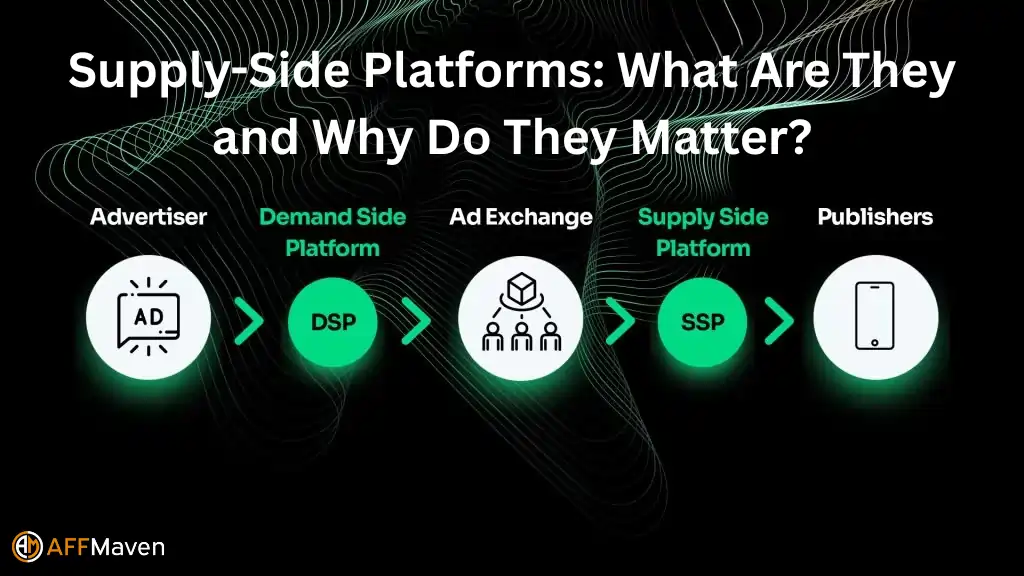
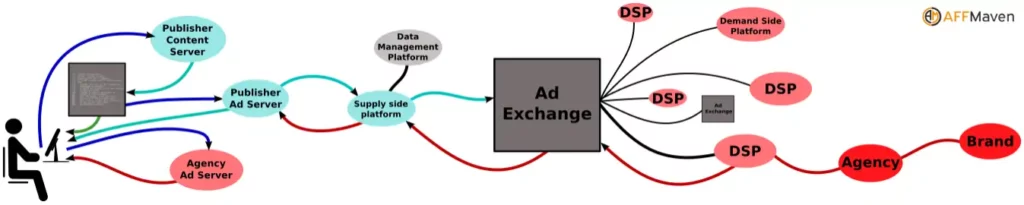
Here’s the beauty: instead of manually negotiating with individual advertisers (who has time for that?), SSPs connect your site to demand-side platforms (DSPs), ad exchanges, and ad networks simultaneously. The result? Multiple buyers compete for your space in real-time auctions, driving prices up.
For affiliate marketers and content creators, this means higher eCPMs, better fill rates, and zero manual labour. Your ad spaces sell themselves while you focus on creating killer content.
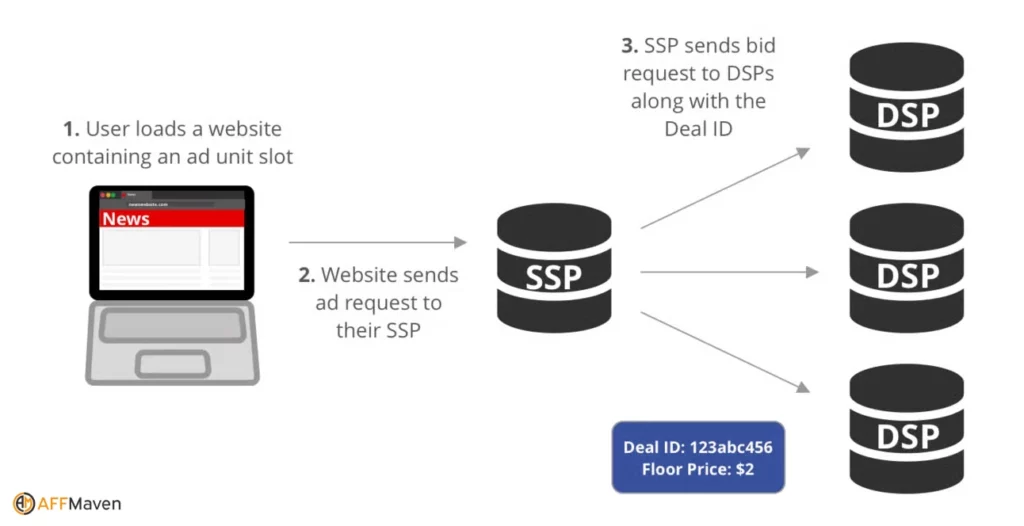
How Supply-Side Platforms Actually Work?
The SSP process happens faster than you can blink:
This entire process takes under 100 milliseconds. That’s programmatic advertising in action – automated, efficient, and profitable.
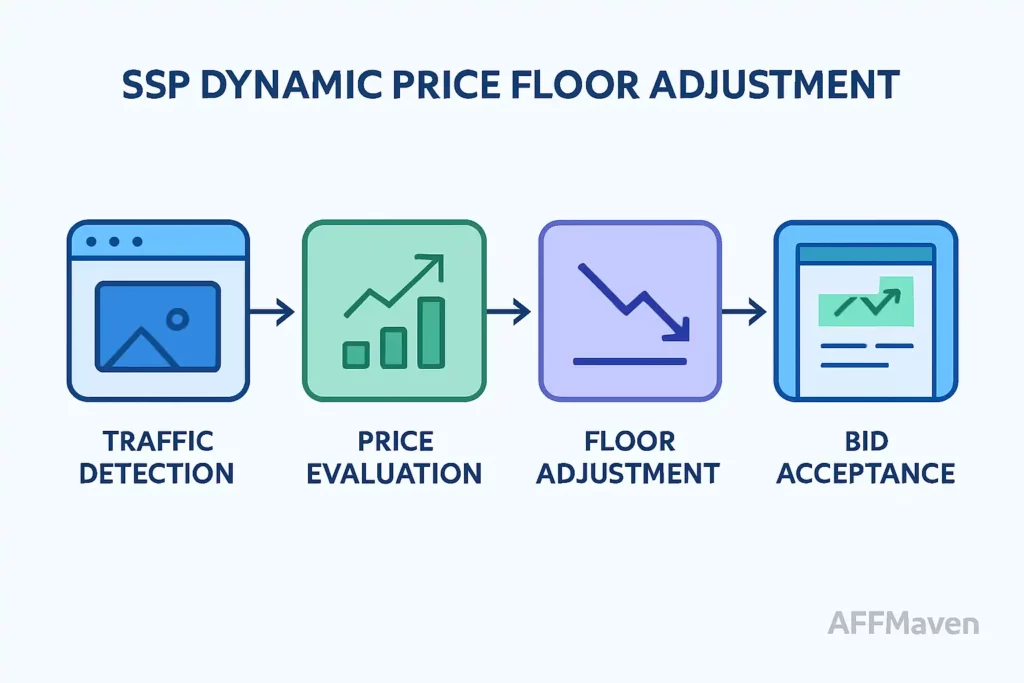
Core SSP Features That Drive Revenue
SSP vs DSP: Understanding the Difference
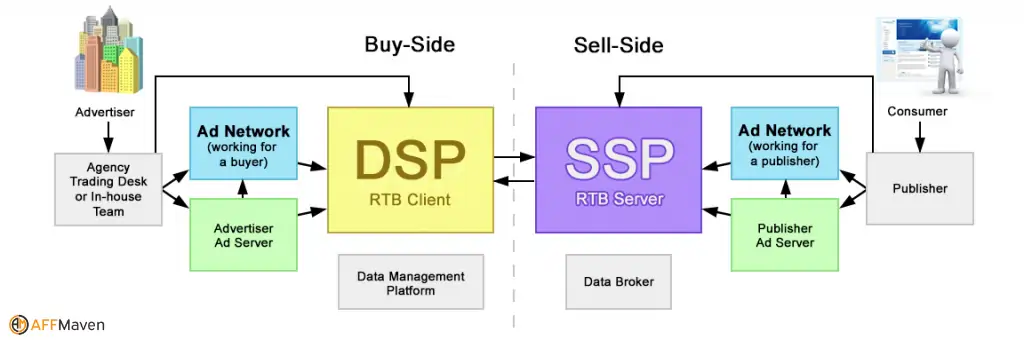
| Supply-Side Platform (SSP) | Demand-Side Platform (DSP) |
|---|---|
| Who uses it: Publishers, affiliates, content creators | Who uses it: Advertisers, agencies, brands |
| Purpose: Sell ad inventory at maximum prices | Purpose: Buy ad inventory at optimal prices |
| Goal: Maximise revenue per impression | Goal: Reach target audiences cost-effectively |
| Example: A tech blog uses SSP to auction banner spaces to software companies | Example: A SaaS company uses DSP to find and bid on relevant tech blog placements |
Why Affiliate Marketers Should Care About SSPs
Top SSP Platforms Worth Considering

Google Ad Manager
The industry heavyweight with massive demand and robust tools. Perfect for high-traffic sites seeking premium buyers.

Magnite
Leading independent SSP with strong video capabilities and transparent auctions. Great for publishers wanting alternatives to Google.

PubMatic
Known for yield optimisation and flexible deal structures. Solid choice for mid-tier publishers.

Amazon Publisher Services
Taps into Amazon’s shopping data for better targeting. Excellent for e-commerce and product review sites.

Adsterra SSP Solutions
Here’s where things get interesting for savvy affiliates. Adsterra offers comprehensive SSP services alongside their established ad network operations. Their platform combines global reach with competitive rates, making it ideal for publishers wanting reliable demand without the complexity.

What sets Adsterra apart? Direct advertiser relationships, anti-fraud protection, and flexible payment terms. Plus, their account managers actually know affiliate marketing – no generic corporate responses here.
Choosing the Right SSP: Key Considerations
Getting Started with SSP Implementation
- Step 1: Audit your current ad setup and identify revenue gaps
- Step 2: Research SSP options matching your traffic profile.
- Step 3: Test multiple platforms simultaneously (if possible)
- Step 4: Implement header bidding for maximum competition
- Step 5: Monitor performance and optimise based on data.
Ready to Maximise Your Ad Revenue?
SSPs represent the future of digital advertising – automated, efficient, and incredibly profitable when implemented correctly. The question isn’t whether you should use an SSP, but which one fits your needs best.
Looking for a reliable partner to start your SSP journey? Consider exploring Adsterra’s publisher solutions. Their combination of global demand, competitive rates, and affiliate-friendly approach makes them worth serious consideration for monetising your traffic effectively.
Stop leaving money on the table. Your ad inventory deserves better than guesswork and manual sales. SSPs turn every visitor into a potential revenue opportunity – isn’t it time you started using them?

Stay Updated with Us
🚀 Get Exclusive Affiliate Marketing Secrets🚀
Discover the strategies, tools, and tactics used by the top 1% of affiliate earners!

Join 69,572+ Affiliates already leveling up their game
Affiliate Disclosure: This post may contain some affiliate links, which means we may receive a commission if you purchase something that we recommend at no additional cost for you (none whatsoever!)