Finding the right AI tools for digital marketing can feel like searching for a needle in a haystack. With countless “automation” platforms out there, many overpromise and leave affiliates with clunky workflows that don’t move conversions.
Here’s the kicker: companies implementing proper AI workflow automation see productivity gains of up to 40% and cost reductions of 30%.
At AffMven we spent months testing dozens of AI automation solutions to separate the genuine workflow optimization tools from the overhyped nonsense. This guide reveals which automation platforms actually work for real businesses.
What are AI Automation Tools and Why Your Business Needs Them?
AI automation tools are systems that use artificial intelligence to execute tasks and workflows that would otherwise require human intelligence and intervention. Unlike traditional rules-based automation, these tools can interpret unstructured data, learn from past interactions, and make complex decisions.

They combine technologies like machine learning (ML), natural language processing (NLP), and computer vision with robotic process automation (RPA) to handle dynamic, end-to-end business processes.
Businesses use these tools for several key reasons:
Struggling with Repetitive Tasks? These AI Automation Tools Can Help
| 🛠️ AI Automation Tools | 🏗️ Architecture | 🔒 Security |
|---|---|---|
| Make | Visual Workflow | OAuth 2.0 |
| n8n | Node-Based, Self-Host | User Auth, RBAC |
| Dumpling AI | Browser Agents | Local Sandbox |
| Albato | Embedded SaaS | GDPR Compliant |
| Zapier | Cloud Integrations | SOC 2 Certified |
| Pabbly Connect | Unlimited Routing | SSL Encryption |
| Katalon | Hybrid Testing | Role-Based Access |
| Mabl | Cloud Parallel | Data Isolation |
| Eggplant Test | Model-Based Digital Twin | Enterprise Grade |
1. Make
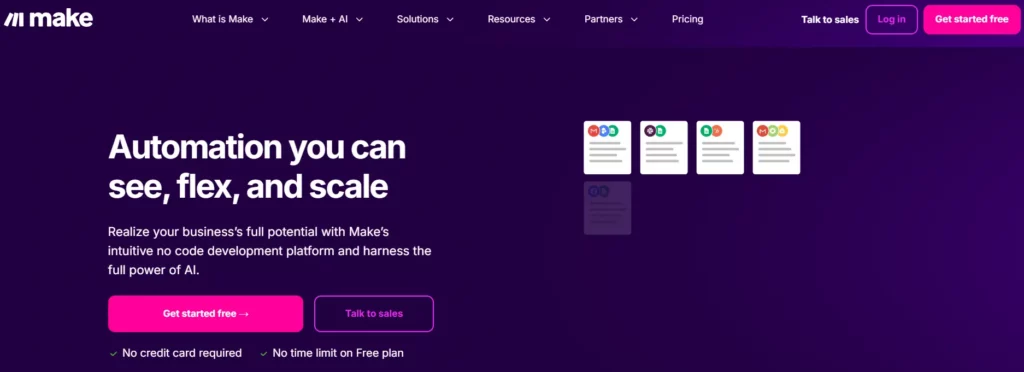
Make is a visually-driven AI automation platform designed for businesses that need to orchestrate complex workflows without writing code. It empowers marketing, operations, and IT teams to connect disparate applications, systems, and data sources into a cohesive, automated process.
Its intuitive drag-and-drop interface allows users to build and scale intricate multi-step automations that handle everything from lead nurturing sequences to advanced data synchronization tasks.
This platform excels at providing granular control over business process optimization, enabling teams to visually map out logic, set error-handling routines, and manage data flow with precision.
Key Features of Make
Make offers a Free plan with 1,000 operations per month, with paid plans starting at $9 per month (billed annually) for 10,000 operations.
Why Choose Make?
Choose Make for its powerful visual builder that provides unparalleled control and flexibility for designing intricate, non-linear business process automations.
2. n8n
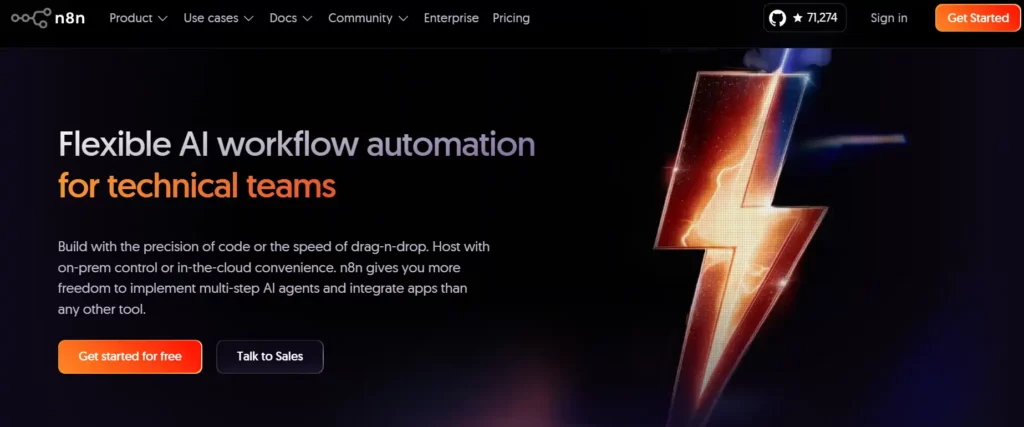
n8n is a flexible, source-available automation platform that lets affiliate marketers stitch together traffic, content, and tracking tools without paying per-task fees or getting locked into rigid SaaS limits. Its visual, node-based builder plus custom JavaScript nodes make it ideal for building automations that actually match a unique funnel or niche.
Its extensible architecture ensures that you can automate any process, no matter how unique, by building your own integrations and logic blocks.
Key Features of n8n
n8n offers a free, self-hosted Community Edition, while cloud-hosted plans begin at approximately $20 per month for 2,500 workflow executions.
Why Choose n8n?
n8n is a source‑available, self‑hostable automation platform for digital marketers to orchestrate CRM, ads, email, SEO, analytics, and AI. Build bespoke workflows with a visual editor and JavaScript, cut costs, own data, and scale campaigns without vendor lock‑in.
3. Dumpling AI
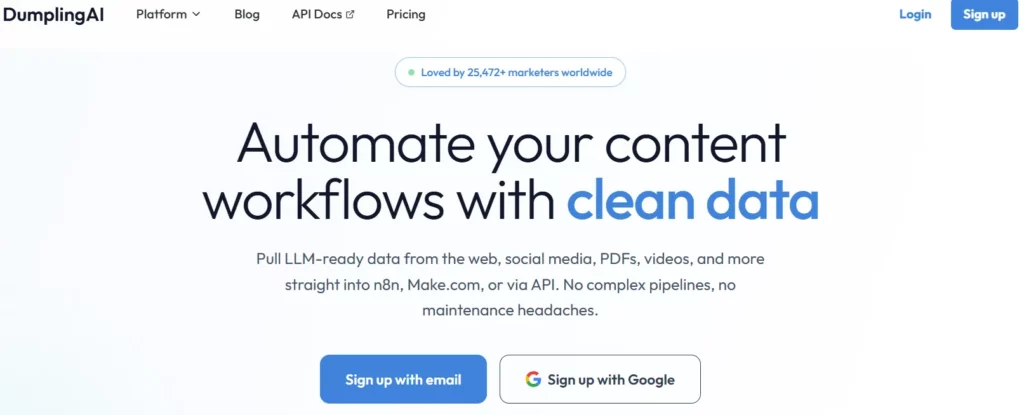
Dumpling AI introduces a novel approach to automation by using AI agents to perform tasks directly within your browser. It’s designed for entrepreneurs, marketers, and operations managers who need to automate repetitive web-based activities like data entry, web scraping, and social media interactions.
You can create specialized AI agents, known as “Dumplings,” that learn and execute tasks on any website without needing complex API integrations, making it a highly accessible AI automation tool.
This platform transforms your browser into an automated workforce, allowing you to delegate high-volume digital tasks to intelligent agents.
Key Features of Dumpling AI
Dumpling AI offers a free trial that includes 100 credits, with paid plans starting at $29 per month for 1,000 credits.
Why Choose Dumpling AI?
Choose Dumpling AI to automate web-based tasks using intelligent agents, eliminating the need for complex API integrations for website interactions.
4. Albato
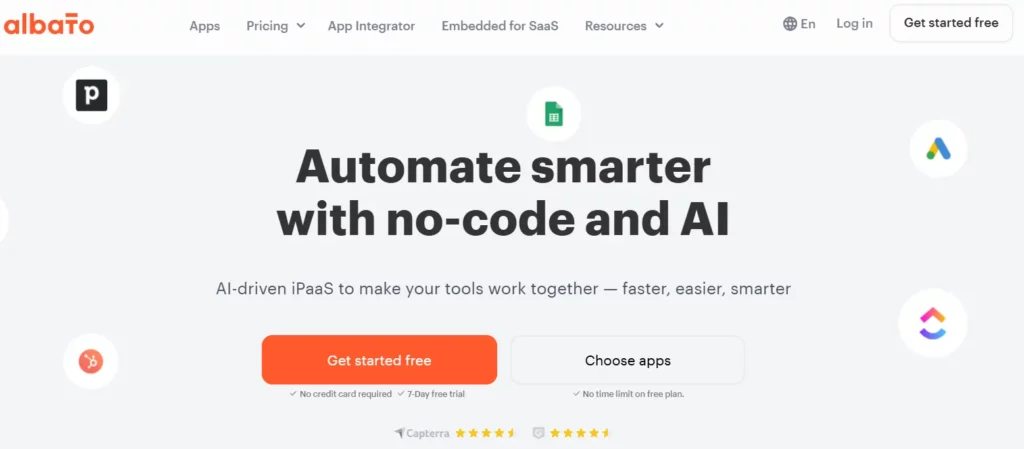
Albato is a no-code AI automation platform that specializes in helping SaaS companies and digital agencies create seamless integrations. Beyond standard workflow automation, its key differentiator is its embedded solution, allowing businesses to offer native integrations to their customers under their own brand.
This makes it an ideal AI automation software for organizations looking to expand their product’s ecosystem, reduce customer churn, and create new revenue streams through white-labeled automation services for their clients.
It provides a scalable and secure infrastructure for building both internal workflows and customer-facing integration marketplaces.
Key Features of Albato
Albato’s pricing is transaction-based, starting from $16 per month (billed annually) for 20,000 transactions and 50 active automations.
Why Choose Albato?
Choose Albato to embed a native, white-labeled integration marketplace directly into your SaaS product, providing value-added services to your customers.
5. Zapier

Zapier is the industry-leading AI automation platform known for its simplicity and vast ecosystem of over 7,000 application integrations. It is the go-to solution for individuals, small businesses, and enterprise teams seeking to quickly automate tasks between the web apps they use daily.
Its user-friendly editor allows anyone, regardless of technical skill, to set up “Zaps”—simple, trigger-action workflows—in minutes. This accessibility makes it a premier AI productivity automation tool, enabling widespread adoption across all business departments, from marketing to HR.
Key Features of Zapier
Zapier provides a Free plan for 100 tasks per month, with paid plans starting at $19.99 per month (billed annually) for more tasks and features.
Why Choose Zapier?
Choose Zapier for its unmatched library of 7,000+ app integrations and its exceptionally user-friendly interface for building automations quickly.
6. Pabbly Connect
Pabbly Connect establishes itself as a highly cost-effective AI automation tool, designed for startups and small-to-medium businesses that need powerful automation without restrictive pricing.
It offers access to all its features, including multi-step workflows, filters, and unlimited workflow creation, across all its pricing tiers. This model is particularly attractive for marketing agencies and businesses with high-volume automation needs who want predictable costs as they scale their operations.
It provides robust automation capabilities that rival top competitors but at a more accessible price point for growing companies.
Key Features of Pabbly Connect
Pabbly Connect offers plans based on task volume, starting at approximately $16 per month (billed annually) for 3,000 tasks.
7. Katalon
Katalon is a comprehensive AI test automation platform engineered for QA teams and developers to enhance software quality across multiple environments.
It provides a unified solution for testing web, API, mobile, and desktop applications, integrating AI-powered capabilities to accelerate test creation and reduce maintenance. The platform supports both low-code and script-based testing, making it adaptable for QA professionals with varying technical expertise.
Katalon streamlines the entire quality assurance lifecycle, from test planning and execution to reporting and analysis, within a single integrated environment.
Key Features of Katalon
Katalon has a free plan with basic features. Paid plans for advanced testing and AI capabilities start at $167 per month (billed annually).
8. Mabl

Mabl is an intelligent, low-code AI test automation platform built to support the speed and demands of modern Agile and DevOps teams. It uses AI to automate the most time-consuming aspects of software testing, including test creation, execution, and maintenance.
Its unique auto-healing capability allows tests to adapt dynamically to UI changes, significantly reducing the effort required to fix broken tests. This platform is designed to make test automation easy to create and reliable to run, enabling development teams to release high-quality software faster.
Key Features of Mabl
Mabl’s pricing is customized based on usage and required features; you must contact their sales team for a detailed quote.
9. Keysight Eggplant Test
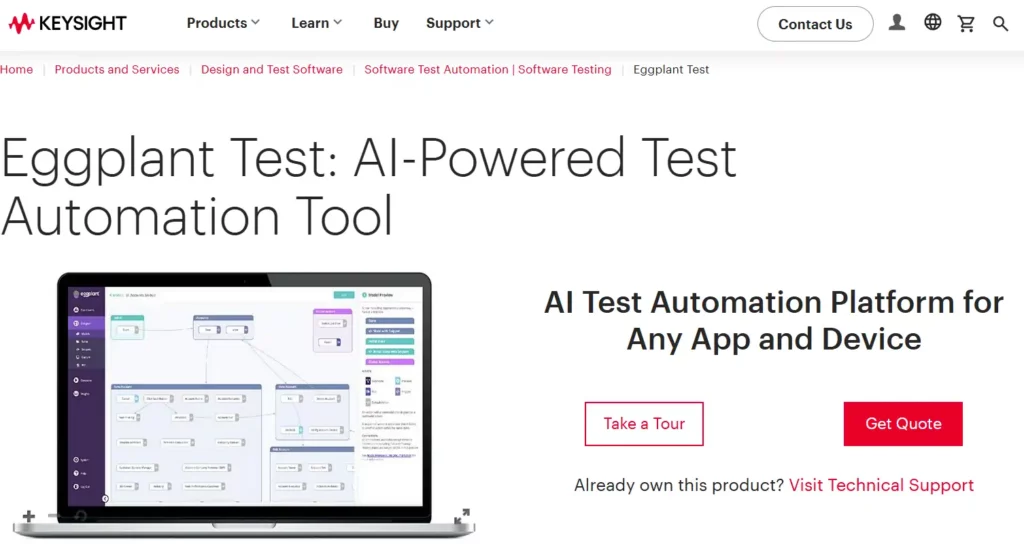
Keysight Eggplant Test is an enterprise-grade AI automation tool that uses a unique, model-based approach to test the end-to-end user experience. Instead of scripting individual steps, it builds a digital twin of your application, allowing it to generate and execute tests that mimic real user journeys.
This method is ideal for testing complex, mission-critical systems in industries like finance, healthcare, and defense where user experience and system reliability are paramount.
Eggplant’s intelligent testing covers the entire digital experience, from functionality and performance to usability, across any platform or device.
Key Features of Keysight Eggplant Test
Pricing for Eggplant Test is available upon request by contacting the Keysight sales department for a custom quote tailored to enterprise needs.
AI Automation vs Traditional RPA: What’s the Real Difference?
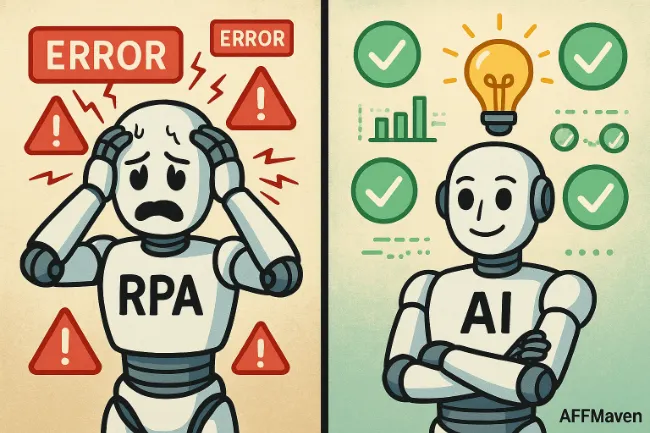
Traditional RPA operates like a digital assistant following strict rules—excellent for structured tasks but breaks when processes change. AI automation transforms this limitation by adding machine learning, natural language processing, and computer vision capabilities that handle dynamic workflows.
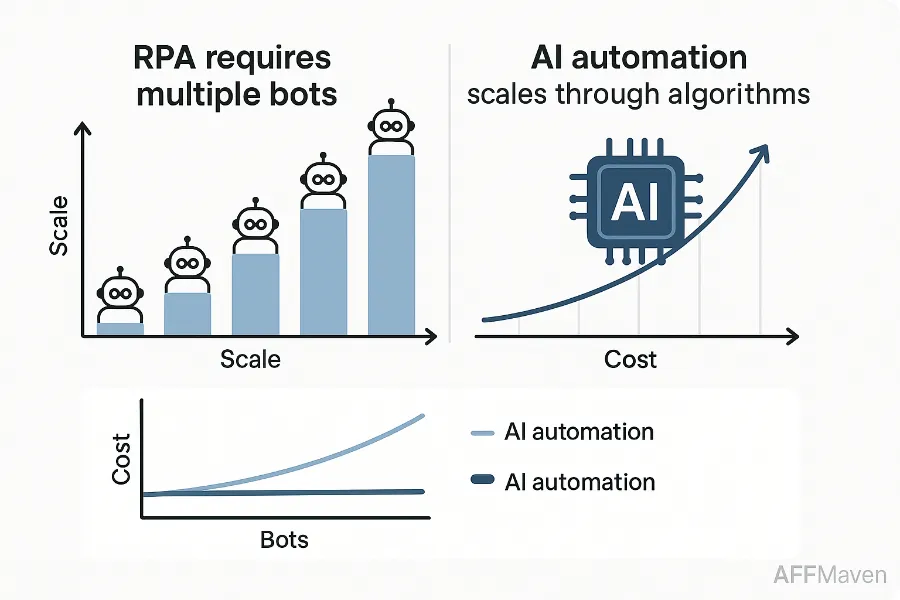
Here’s the breakdown: RPA processes structured data only, whilst AI automation tackles the 80% of business data that’s unstructured—emails, PDFs, images, and documents. When your invoice format changes, RPA bots fail and need reprogramming. AI-powered systems adapt automatically, recognising new layouts without manual intervention.
Choose RPA for stable, repetitive tasks. Select AI automation for adaptive processes requiring intelligence, context awareness, and continuous learning capabilities.
Final Thoughts on AI Automation Tools
AI automation isn’t just faster—it’s smarter. The sweet spot is matching use cases to the right stack: simple, rules-based flows fit classic RPA; messy, unstructured workflows need AI workflow automation with NLP, ML, and document understanding.
For technical teams, n8n stands out: self-hosted or cloud, source-available, and ideal for mixing AI steps, code nodes, and human approvals with RBAC and audit logs.
Start with one high-impact process (lead routing, invoice intake, ticket triage), measure time saved and error reduction, then scale. Focus on governance, security, and cost-per-execution. Pick tools that integrate cleanly, handle unstructured data, and won’t punish you at scale.

Stay Updated with Us
🚀 Get Exclusive Affiliate Marketing Secrets🚀
Discover the strategies, tools, and tactics used by the top 1% of affiliate earners!

Join 69,572+ Affiliates already leveling up their game
Affiliate Disclosure: This post may contain some affiliate links, which means we may receive a commission if you purchase something that we recommend at no additional cost for you (none whatsoever!)